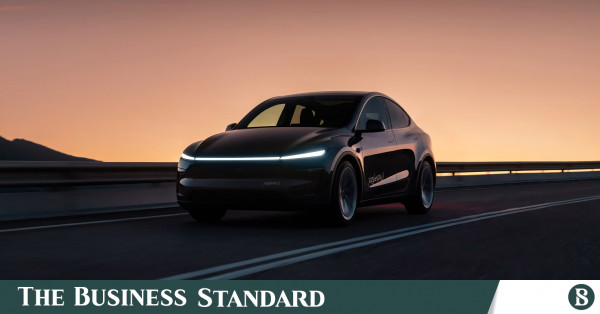
Tesla's Robotaxi Gamble: Unlocking a Trillion-Dollar Future?
Elon Musk's ambitious
tesla robotaxi push isn't merely another product launch; it's a high-stakes bet that could fundamentally redefine the company's trajectory and secure its place as a dominant force in a multi-trillion-dollar autonomous mobility market. Having built its formidable reputation on electric vehicles, Tesla is now strategically shifting its focus, prioritizing the intricate development and deployment of self-driving taxis. This pivot signals a profound change in strategy, moving beyond simply selling cars to offering a transformative ride-hailing service, and with it, the potential for unprecedented revenue streams.
The company's valuation has long been buoyed by its perceived status as a technological innovator. Now, a substantial portion of Tesla's future growth hinges on the unequivocal success of its robotaxi venture. This encompasses not only the monumental engineering challenge of achieving true autonomy but also the establishment of a robust, scalable business model for a global ride-hailing network. While the promise of massive profits is enticing, the journey is fraught with considerable obstacles, including complex technological hurdles, a mosaic of regulatory challenges across jurisdictions, and an increasingly competitive landscape. For Musk, this isn't just about innovation; it's about cementing his legacy and ensuring Tesla's long-term dominance.
The Strategic Pivot: Why Robotaxis are Tesla's North Star
Tesla's transition from an electric car manufacturer to a future mobility service provider represents one of the boldest strategic shifts in modern corporate history. Elon Musk has famously articulated a vision where Tesla owners can seamlessly integrate their personal vehicles into a shared robotaxi fleet, generating passive income and significantly boosting the utility of their investment. This model aims to create a powerful network effect: more Teslas on the road mean a larger robotaxi fleet, which in turn leads to shorter wait times, increased demand, and ultimately, even more vehicle sales. This intricate ecosystem could not only drive recurring revenue for Tesla but also reinforce its position in the consumer automotive market.
Musk has even suggested that the immense profitability of robotaxis could allow Tesla to forego its previously stated goal of producing 20 million vehicles by 2030, instead focusing on maximizing the value derived from its existing and expanding autonomous fleet. This audacious prediction underscores the gravity of the robotaxi initiative. It’s a move that seeks to leverage Tesla's substantial investments in artificial intelligence and proprietary hardware, turning them into a formidable competitive advantage in the race for autonomous driving dominance. This isn't just about selling more cars; it's about selling miles, subscriptions, and a new paradigm of transportation. To understand the depth of this shift, one can delve into
Musk's Robotaxi Pivot: Redefining Tesla's Future with AI & FSD.
Navigating the Road Ahead: Technological and Regulatory Hurdles
The path to widespread robotaxi deployment is anything but smooth. Achieving true Level 4 or Level 5 autonomy—where a vehicle can operate completely without human intervention in most or all conditions—remains an enormous technical challenge. Tesla’s Full Self-Driving (FSD) software, while continuously evolving, has faced rigorous scrutiny regarding its safety, reliability, and capability to handle the myriad unpredictable scenarios encountered on public roads. Critics often point to the limitations of a camera-only approach, contrasting it with systems that incorporate additional sensors like LiDAR and radar, which provide different forms of environmental perception.
Beyond the technological frontier, regulatory challenges loom large. Each city, state, and country presents its own unique legal framework, safety standards, and public acceptance hurdles for autonomous vehicles. Navigating this complex regulatory patchwork requires significant lobbying, testing, and adaptation. Furthermore, the autonomous vehicle space is attracting intense competition from tech giants and established automakers alike, each vying for a slice of the future mobility pie. Tesla’s ability to overcome these intertwined technological and regulatory obstacles will be paramount to the success of its robotaxi ambitions. Investors and consumers alike are closely watching key metrics: miles driven without intervention, incident rates, and the speed of regulatory approvals.
Scaling Up: Tesla's Robotaxi Fleet Takes Shape
Despite the inherent challenges, Tesla is aggressively scaling its robotaxi ambitions, with tangible growth beginning to emerge. The company's tracked robotaxi fleet now encompasses roughly 240 vehicles across two critical markets. The San Francisco Bay Area continues to host the majority of these vehicles, with approximately 168 Model Ys currently in service. However, Austin, Texas, is rapidly emerging as a pivotal testbed, boasting around 72 vehicles and demonstrating a sharply upward growth curve. This rapid expansion in Austin is no coincidence; it reflects Tesla's strategic push to scale in environments where regulatory permissions allow for more advanced autonomous operations.
A significant milestone was recently achieved in Austin: Tesla officially began offering completely unsupervised robotaxi rides to the public, meaning no safety driver or human monitor is onboard. This marks the first time any company has launched a public autonomous ride-hailing service relying solely on cameras, foregoing LiDAR or radar. This bold move has triggered an immediate surge in rider interest, placing pressure on Tesla to further expand its Austin fleet to manage demand and minimize wait times. In contrast, Bay Area operations continue to include a safety driver behind the wheel for now, indicating a cautious, dual-market approach where Austin serves as the proving ground for true autonomy while California allows for continued data collection and cautious scaling. It’s also worth noting that these dedicated robotaxi Model Ys feature exclusive hardware tweaks, such as camera washers and other subtle modifications, optimizing them for continuous autonomous operation beyond what is available in standard consumer vehicles. For a deeper dive into these expansion efforts, read
Tesla Robotaxi Expansion: Austin Goes Driverless as Fleet Nears 250.
The Trillion-Dollar Question: Potential and Risks for Tesla's Future
The ultimate success or failure of Tesla’s robotaxi efforts will undoubtedly be a defining moment for the company. Should Musk's vision materialize, with millions of self-driving taxis generating vast, recurring profits, Tesla could indeed transform into an autonomous mobility behemoth with a market capitalization far exceeding its current valuation, easily entering the multi-trillion-dollar realm. The revenue potential from a global network of autonomous taxis, combined with the associated services and data, is staggering.
However, the risks are equally monumental. Failure to deliver on Level 4/5 autonomy, significant safety incidents, or insurmountable regulatory roadblocks could severely impact Tesla's brand, financial performance, and stock valuation. The "make-or-break" nature of this venture for Elon Musk's legacy is palpable; it represents the ultimate test of his belief in AI and his ability to execute on the most ambitious technological promises. For investors, monitoring the pace of fleet expansion, the safety record of unsupervised operations, and global regulatory advancements will be crucial indicators of Tesla's long-term viability in this high-stakes game. For consumers, the promise is a future of cheaper, more convenient, and safer transportation, but the timeline and reliability remain subjects of intense debate.
The
tesla robotaxi push is more than an engineering project; it's a strategic gamble with the highest possible stakes. It envisions a world transformed by autonomous mobility, where Tesla isn't just selling cars, but an entirely new way of moving people. Whether this bold vision culminates in a trillion-dollar triumph or a cautionary tale will undoubtedly be one of the most compelling narratives in the coming decade.